CRM for services firms and B2B sales
You didn't lose the deal. It slipped your mind.
PulseUp is your team's memory, from the first meeting to the last deliverable.
Sound familiar?
- “I thought you were following up”
- “What did we promise last time?”
- “Who sent that file?”
- “Rezaei left — whose account is it?”
- “Six months since we called this client”
- “We answered this before”
The product itself
Four screens you open every day
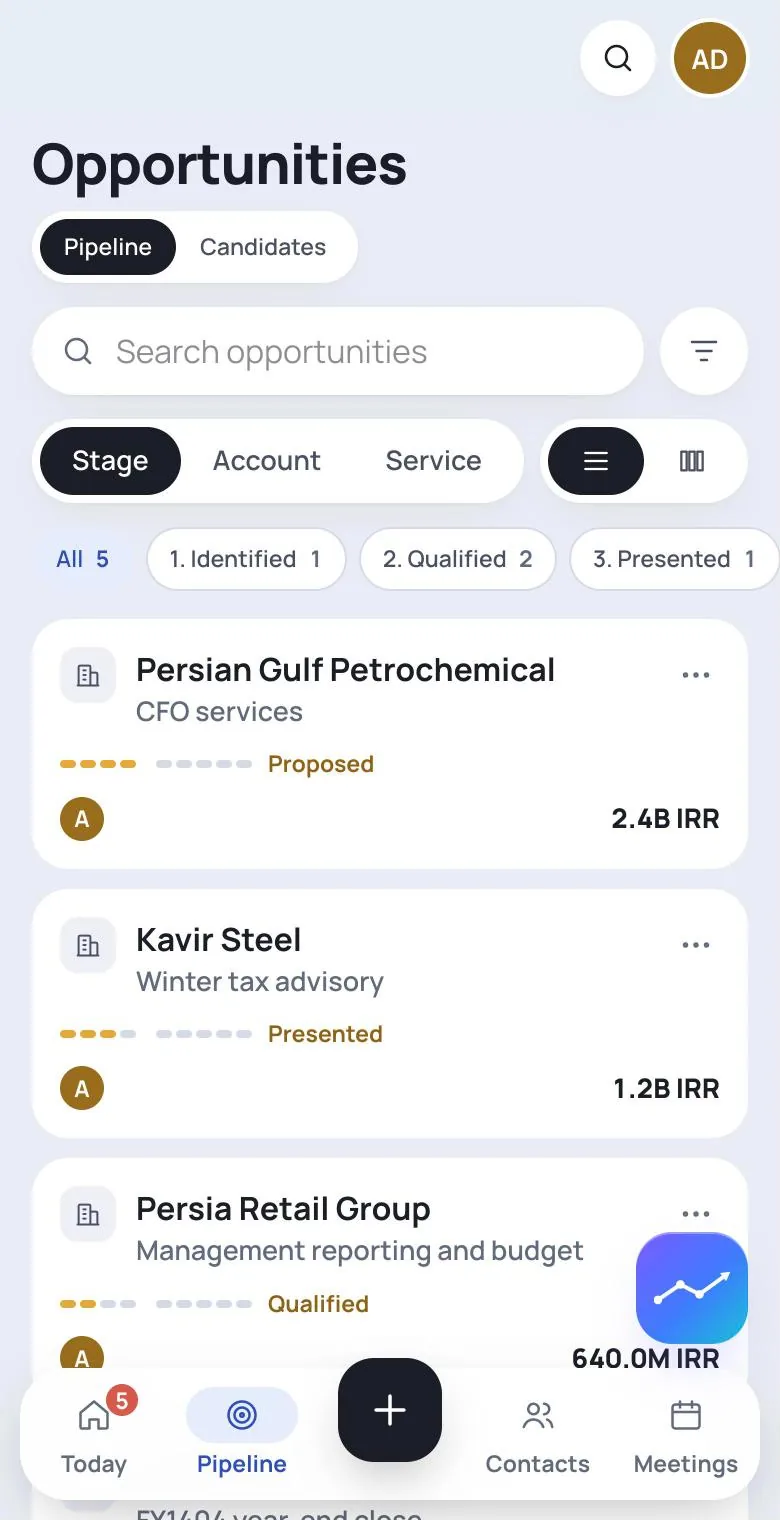 Pipeline
Every opportunity, its stage and its fee
- Each stage says what it expects
- What was sent is on the record, with its date
- A won opportunity becomes an engagement
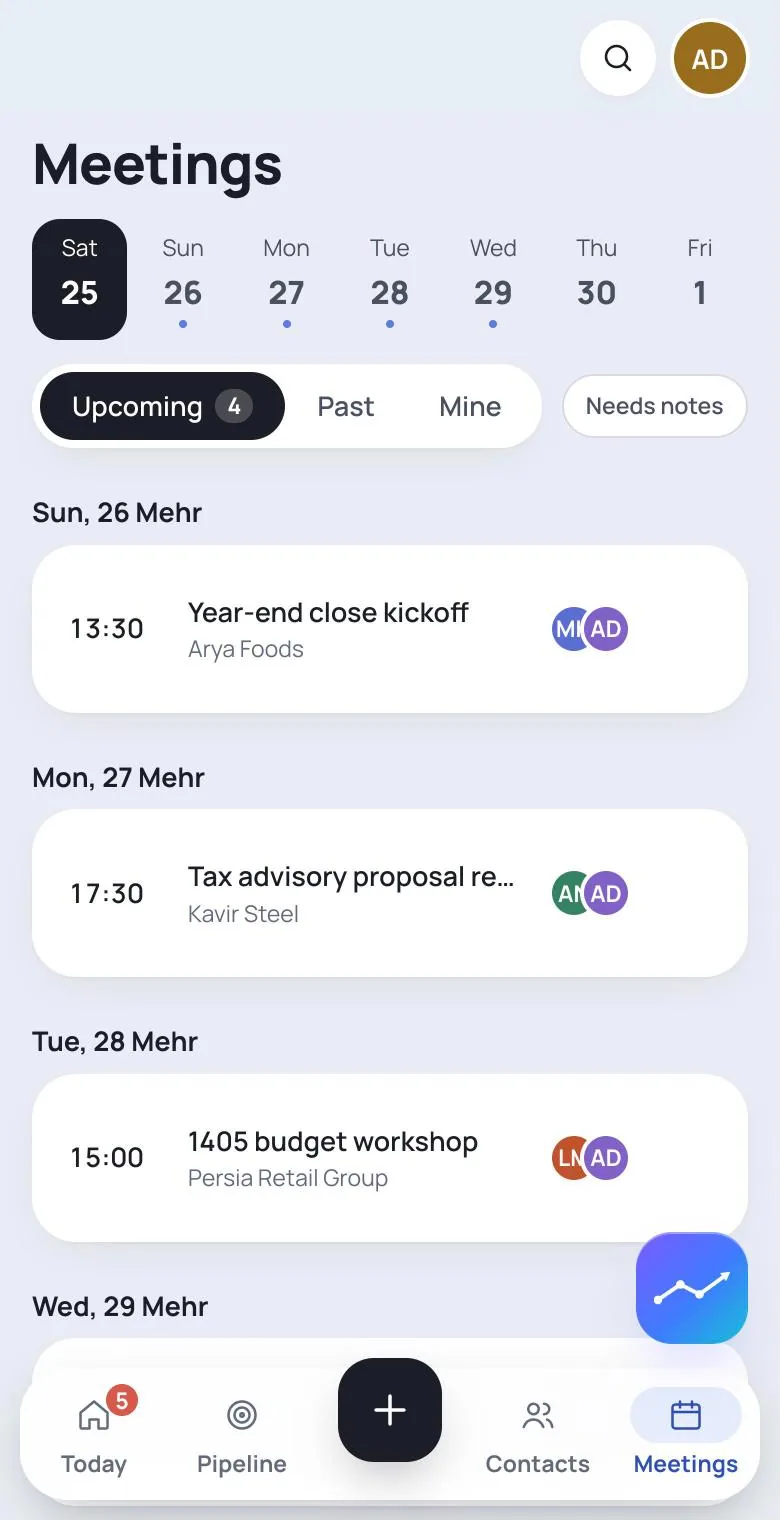 Meetings
The meeting writes its own record
- The client's name is recognised as it is said
- Decisions and tasks reach the right page once you approve
- Each person sees only the part they are entitled to
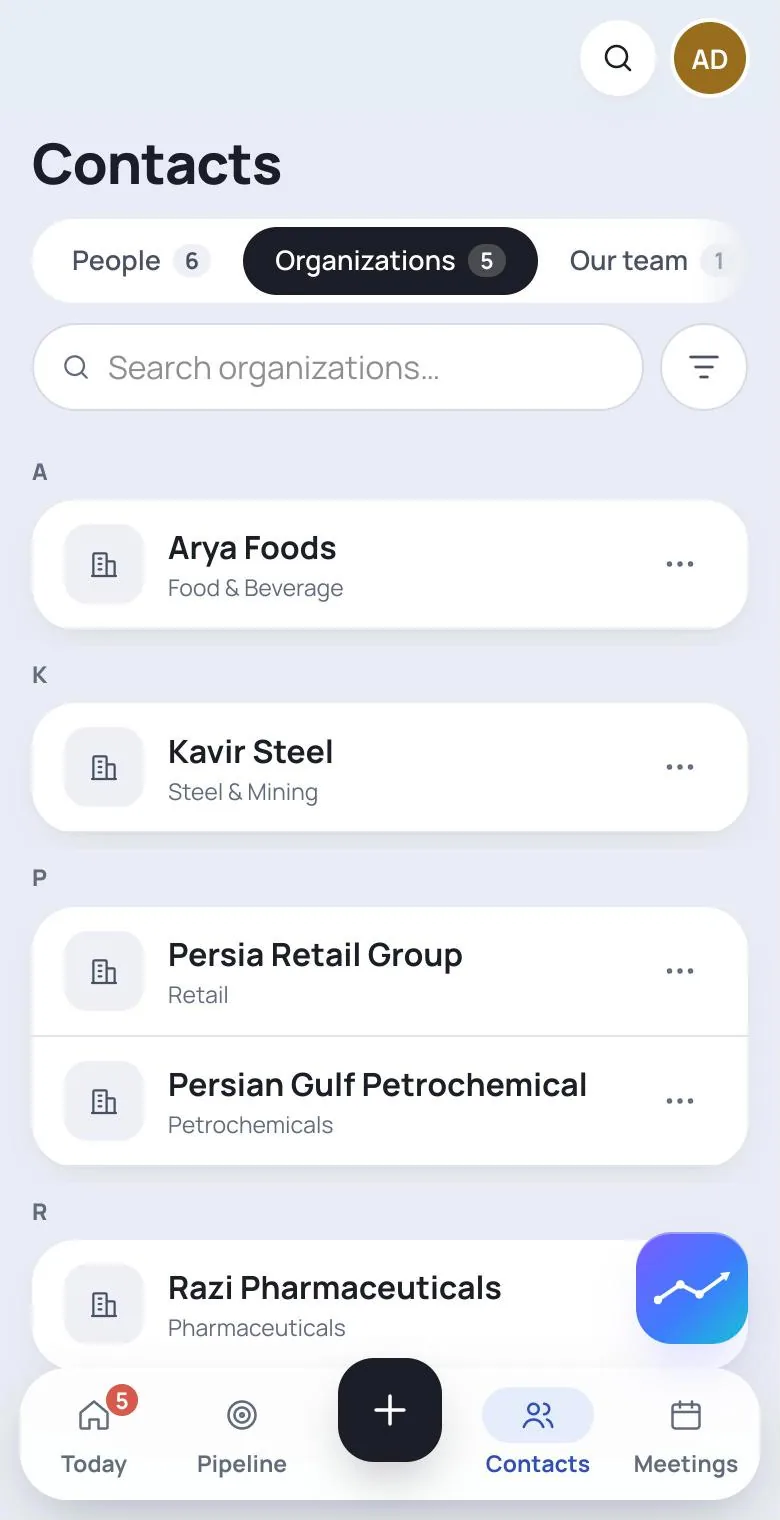 Contacts
Someone answers for every account
- Every organisation has an account manager
- Every contact has their own officers
- A holding company sees its whole group
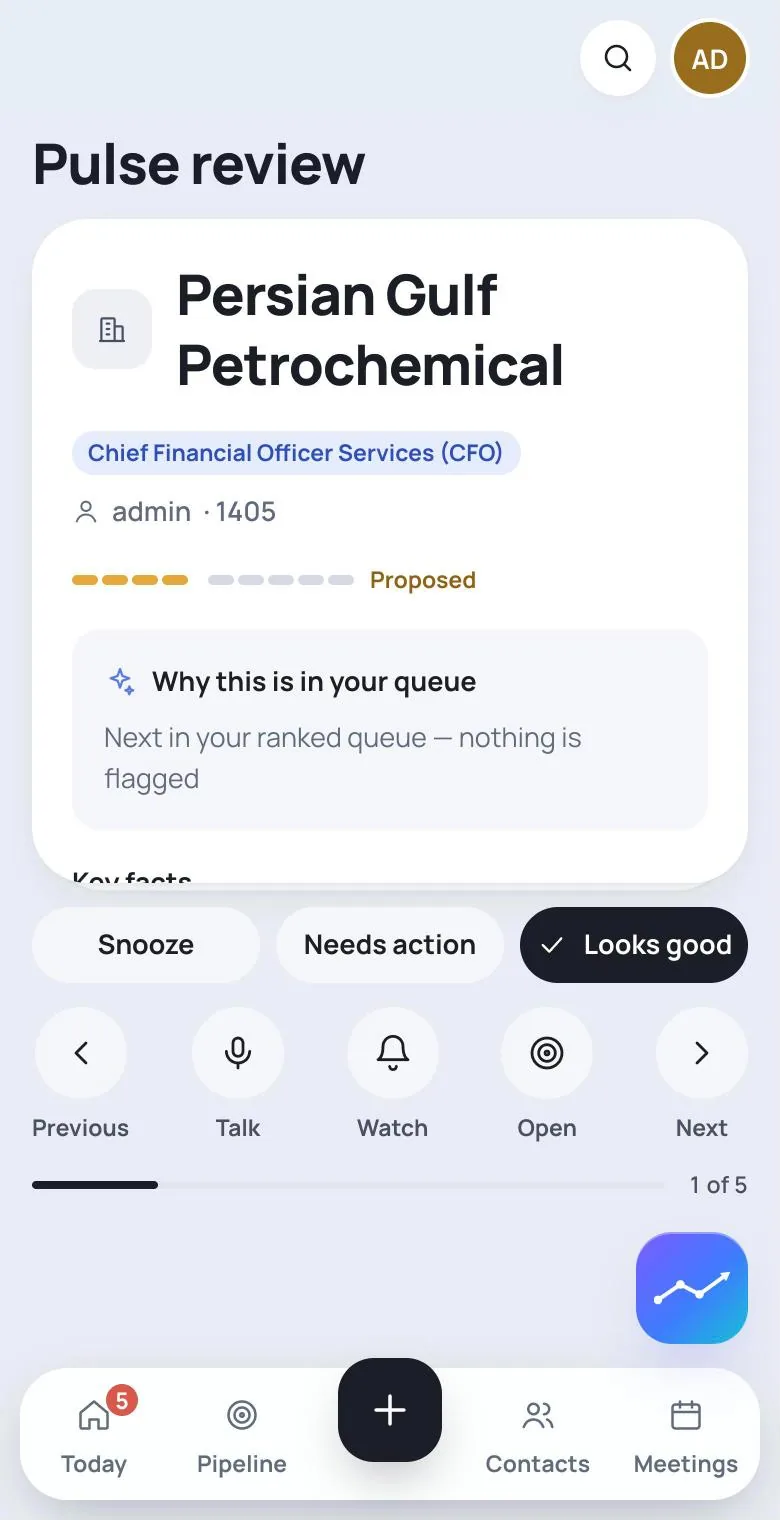 Pulse
PulsePulse tells you which account needs you today
- One queue, with the reason for each item
- Looks good, needs action, or snooze, in one tap
- An account that went quiet comes back by itself
PulseUp is a CRM that remembers the account for you
- A meeting
- A document
- A conversation
PulseUp
The organisation's memory
- Quiet accounts speak up
- Answers, with their source
- A funnel nobody has to fill in
On your phone
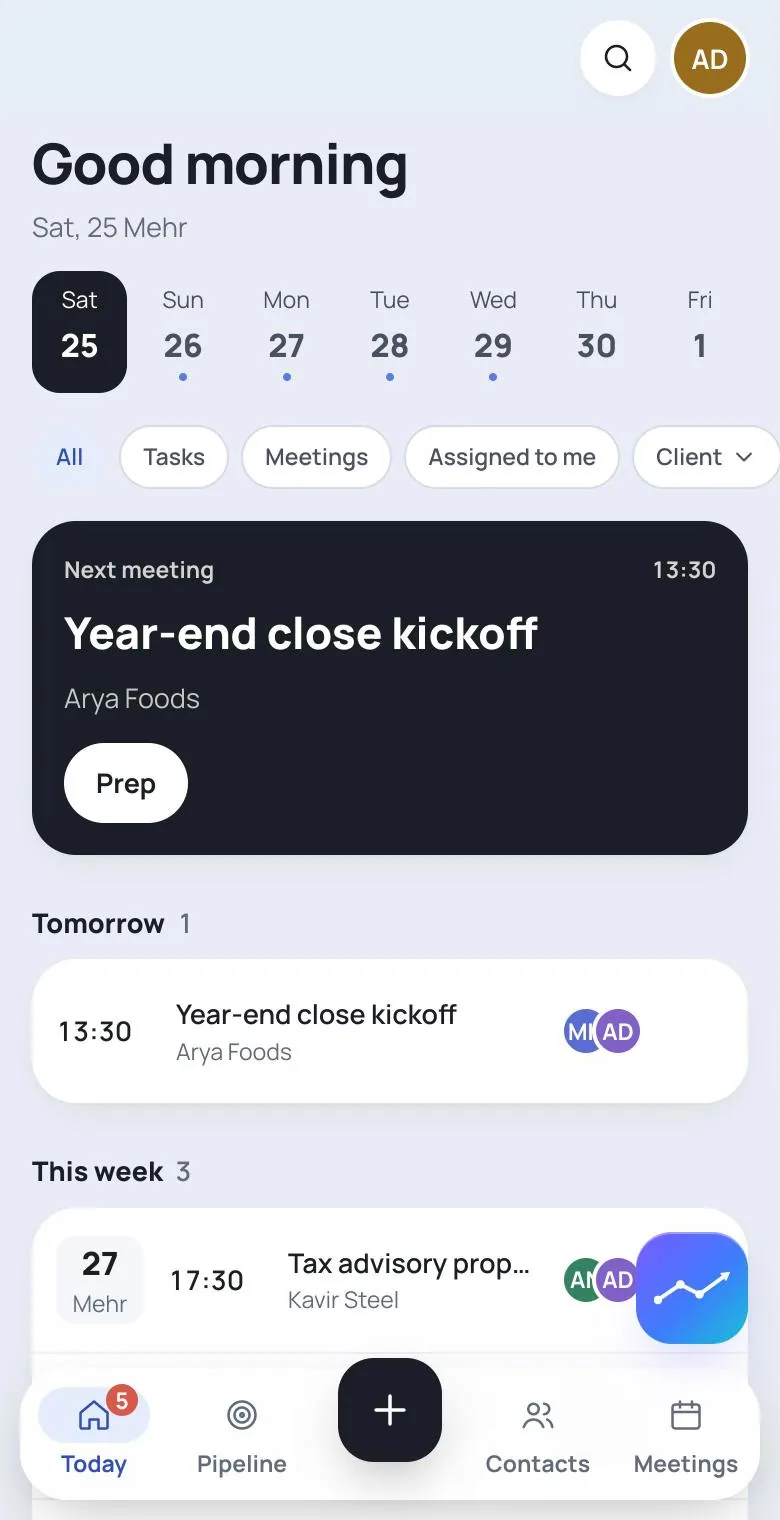
All of the work, in your pocket
Today
Today's tasks and meetings
Pipeline
Every opportunity at its stage
Pulse review
One at a time, one tap each
Meetings
The week ahead
Contacts
People and organisations
Falsifiable
Five sentences you can test
The assistant answers only from what the asker is entitled to see.
Nothing is written without a human yes.
Every model call shows its cost before you press.
Stage history is only ever appended; it has no edit and no delete.
In our cloud, or entirely on your own servers, with no phone-home.
Who it's for
Work that takes months and passes through several hands
Teams of 5 to 50 where account knowledge lives in people's heads and WhatsApp threads.
Advisory firms
Concurrent engagements, and a funnel the partners rely on.
“The mandate ended, and what we learned left with the team.”
Industrial and B2B sales
Long cycles, many deciders, a promise you don't forget.
“Six months of negotiation, and the minutes are on my phone.”
Accounting and audit
Client paperwork into a working file, evidence attached.
“The evidence exists; nobody knows where.”
In-house finance teams
Closing and variance, without going back to the same spreadsheet every month.
“This month's close came down to the usual spreadsheet again.”
Investment and PE
Deal flow, diligence and portfolio on one record.
“We looked at this company two years ago — where is that work?”
Banks and lenders
Borrower statements standardised in minutes.
Solo consultants
One person working like a firm.
“Everything lives in my head; that is exactly what worries me.”
The four things we always hear
We already have a CRM.
And probably nobody updates it. Here the funnel is built from the day's work: the meeting, the note, the voice memo. If your team keeps its current CRM current, you don't have this problem.My team never enters anything.
Which is why the way in isn't a form. A short note or a voice memo after a meeting produces the task and the history by itself.What is the difference between an opportunity and an engagement?
An opportunity is work you are chasing; an engagement is work you have won. A won opportunity creates the engagement and stays as its history. Each has its own board and its own stages.Does our data have to go to the cloud?
No. You can run it on your own servers: an offline licence, nothing phones home, and the language model can sit inside your network.
Open your first opportunity
Import your contacts and see what each stage asks of you.